
Why Does My Horse Lean on The BIt?
Why It Happens and How to Fix It Properly
Leaning on the bit is one of the most common problems riders contact me about. Leaning has multiple causes including bit discomfort and incorrect mechanics, rider hands, lack of balance, poor training and even conformation. For the rider it is physically tiring, frustrating and often confusing. Your arms ache, your shoulders tighten and schooling becomes hard work rather than enjoyable. For the horse, leaning can lead to tension, resistance and sometimes discomfort around the mouth.
It rarely starts overnight, and it is rarely caused by just one thing.
Why Horses Start Leaning
Many riders notice leaning reappears when horses return to more consistent work. Even if they have been ticking over through winter, they frequently lose the muscle strength required to carry a rider correctly.
The muscles along the back and hindquarters weaken surprisingly quickly. Without sufficient engagement and core stability, horses naturally travel more on the forehand. When they tire, they look for support and the rein becomes that support.
The bit may not have changed.
But the horse has.
Changes in muscle tone, posture and balance alter how the bit feels in the mouth. A horse that felt light and responsive last summer may now feel heavy simply because they are weaker and less stable.
In some cases leaning is seasonal. In others it happens all year because strength, rider influence and bit fitting have never quite been addressed together.
Will a Stronger Bit Solve Leaning?
It is tempting to assume that moving to a stronger bit will create lightness. In reality, stronger does not automatically mean lighter.
If a mouthpiece creates excessive pressure, instability or discomfort, some horses will brace through the jaw and lean in order to stabilise what they feel. Others learn that the rider will hold them up, removing the need for self carriage altogether.
This is why simply changing to something stronger often masks the problem rather than solving it.
The Bit Fitting Perspective
From a professional horse bit fitting perspective, stability and comfort are far more important than severity.
Small details make a significant difference:
Correct width prevents sliding or pinching.
Appropriate thickness must suit the individual horse’s oral conformation, particularly tongue volume and palate height.
Adequate tongue space allows relaxation rather than restriction.
The way the bit sits within the lips influences consistency in the contact.
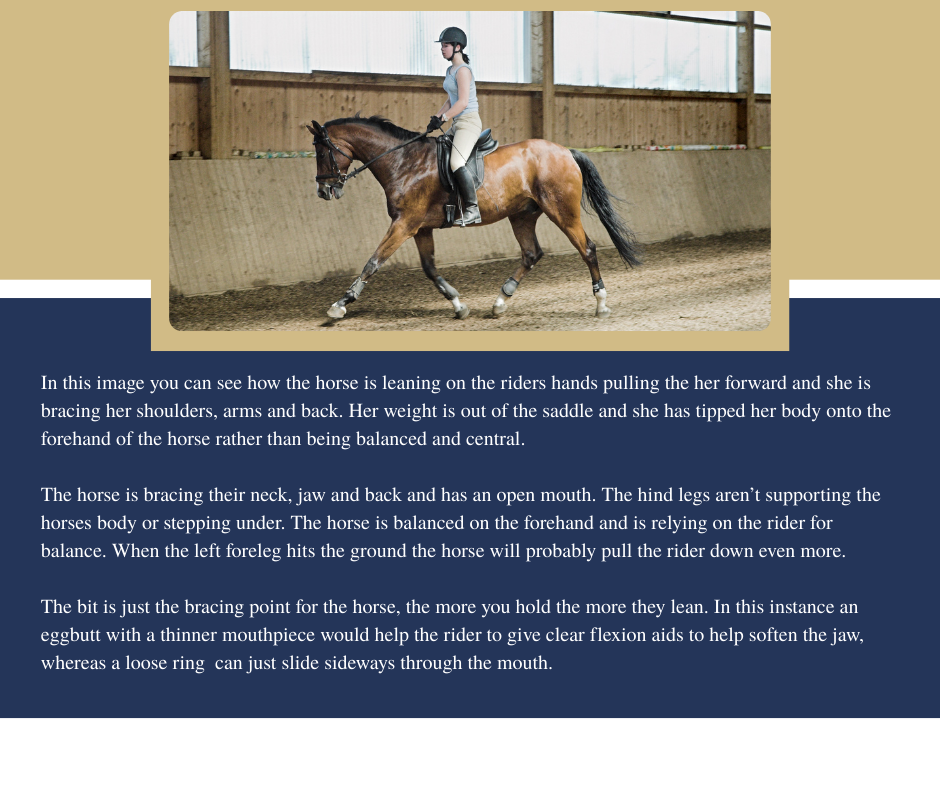
For example, a thinner mouthpiece can feel clearer and more refined for some horses, while excessive bulk may encourage them to brace. An eggbutt cheekpiece provides more stability and clearer lateral guidance. A loose ring introduces more movement, which some horses accept happily and others resist.
When an unsuitable bit is combined with fatigue or weak engagement, leaning can quickly become an established habit rather than a temporary weakness.
Training Still Matters
No bit replaces correct training.
Horses must learn to carry themselves. Frequent transitions, changes within the pace, flexions, lateral work and well ridden downward transitions all help develop strength and balance. The horse must remain in front of the leg rather than being held together by the hand.
Rider position plays a significant role too. Fixed hands, locked elbows or a lack of an independent seat can unintentionally give the horse something solid to lean against.
Looking at the Whole Picture
Leaning is rarely just about one factor. It is usually a combination of:
Physical strength
Balance and posture
Rider influence
Equipment suitability
When these elements are assessed together, the picture becomes much clearer and the solution far more effective.
If your horse feels heavy in the hand, braces in transitions or consistently leans into the contact, it is worth seeking a thorough assessment rather than simply riding stronger.
True lightness comes from correct development, muscular strength, stability and clear, comfortable communication through a well fitted bit. Not force.
When to Seek Professional Help
If your horse feels heavy in the hand, braces in transitions or consistently leans into the contact, it is worth looking at the whole picture properly rather than simply riding stronger or changing bits repeatedly.
As a specialist bit fitting, I assess the horse’s oral conformation, current muscle development, way of going and rider influence before recommending any changes. Very often it is not about finding a stronger bit, but about finding the most stable, comfortable and appropriate option for that individual horse at that stage of their training. In my Premium Bit Fitting Service I teach you how to help resolve the issue with kind proven training methods.
Leaning does not improve through force. It improves through correct development, thoughtful training and clear, sympathetic communication.
If you would like your horse assessed professionally, you can find MORE INFORMATION about my mobile horse bit fitting service HERE. I cover Kent and the South East, and also offer remote consultations for clients further afield, click HERE for more information.
If you are struggling with leaning issues or your horse is feeling strong please see my downloadable bitting guides:
Common Bit Evasions – Click HERE
Bits For a Strong Horse – Click HERE
Bits For a Young Horse – Click HERE


