
Choosing a Bit For a Strong Horse is Never Easy
Your horse is strong, pulling, leaning on your hands, or just not listening – and you’ve probably already tried a stronger bit. Maybe it helped for a while. Perhaps it made things worse. Now you’re not sure what to try next.
This guide is for you
The truth is that a strong horse is rarely just a bitting problem. It is usually a combination of factors – training, fitness, conformation, rider position, and yes, sometimes the bit too. Reaching straight for a stronger bit without understanding why the horse is being strong often makes the underlying issue worse, not better.
Written by Angela Rudrum, independent bitting consultant with 35 years of experience working with strong horses across all disciplines, this guide helps you work out exactly what is going on with your horse and make genuinely informed decisions about what to do next.
This is not about making your horse fear your hands. It is about finding the real reason they are strong and fixing that.
Inside this guide:
- A health checklist to rule out pain, lameness and physical causes before you change anything
- Key points for consideration: age, conformation, fitness, training level and work history
- Rider evaluation: how your own position and hands contribute to a strong feeling horse
- How to assess whether your horse is strong all the time or only in certain situations — and why that matters
- Common problems with strong horses explained with practical solutions
- When a stronger bit is the right answer and when it absolutely is not
- How to change bits gradually without creating new problems
- A full bit guide covering the designs most useful for stronger horses, with honest explanations of how each one works
£9.99 — instant download
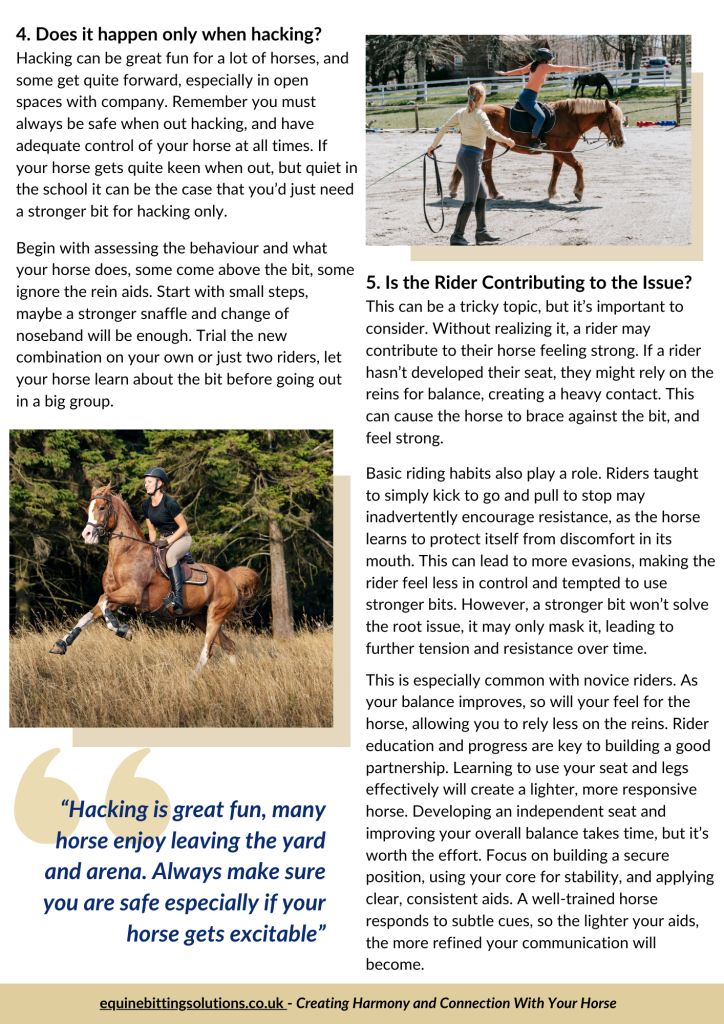
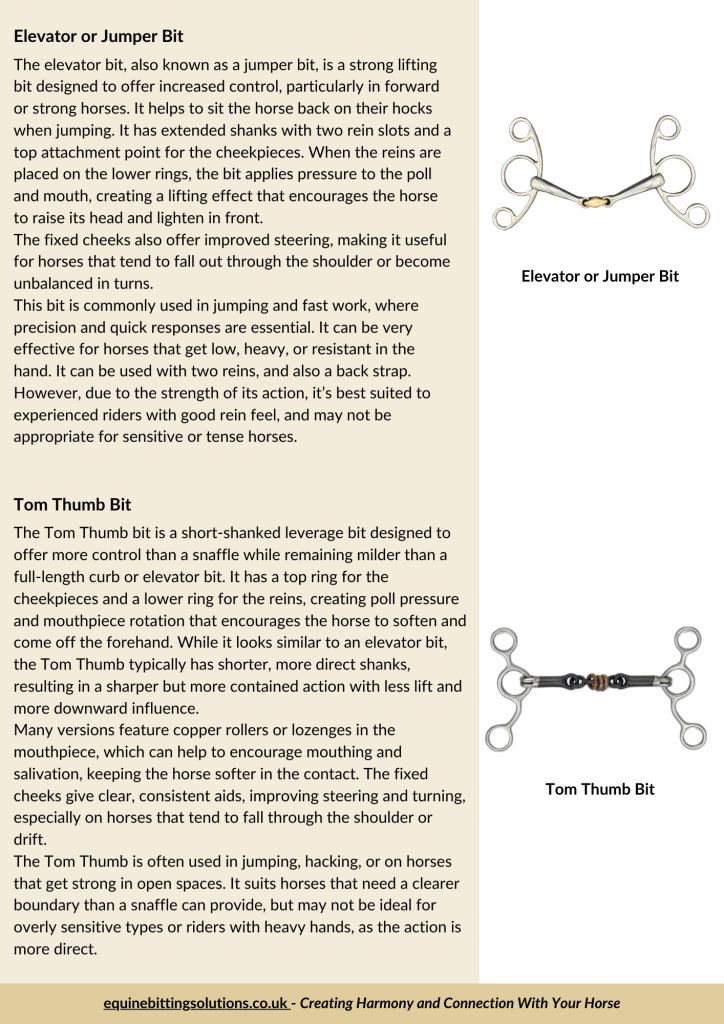
A look inside the guide – including advice for hacking and exciting situations, plus a full bit guide covering stronger designs.
Frequently Asked Questions
Why has my horse suddenly become strong?
A sudden change in behaviour is always worth investigating before changing the bit. Pain, lameness, back issues, poorly fitting tack, or teeth problems can all cause a horse to become heavy or strong seemingly out of nowhere. This guide includes a health checklist to work through before making any bitting changes, so you address the real cause rather than masking it.
Will a stronger bit fix my strong horse?
Sometimes, but not always, and it depends entirely on why the horse is being strong. If the issue is training-related, a stronger bit will not fix it and may create new evasions. If the horse is genuinely stronger in exciting situations such as hacking in company or cross country, a more effective bit can make a real difference to both safety and comfort. This guide helps you work out which situation you are in before you make any changes.
My horse is only strong in certain situations — what does that mean?
This is actually really useful information. A horse that is strong all the time is a different problem to one that is only strong when excited, in company, or doing certain work. This guide covers both scenarios in detail, explaining what each pattern of behaviour usually indicates and what to do about it.
Can rider position make a horse feel strong?
Yes, significantly. A rider who is unbalanced, tipping forward, or using their hands for support will create a heavy feeling in the contact regardless of what bit is in the horse’s mouth. This guide includes a rider evaluation section covering the most common ways riders unknowingly contribute to a strong feeling horse.
Is my horse strong because of the bit I am using?
It is possible, but it is one of several things to consider rather than the first thing to change. Some bits create a leaning or pulling response because of how they distribute pressure in the mouth. Others are too mild for a horse that needs a clearer signal. This guide explains how different bit designs affect how a horse carries themselves in the contact, and which designs tend to help with stronger horses.
What bits are best for a strong horse?
There is no single answer because it depends on why the horse is strong, their training level, conformation, and what has been tried before. This guide walks you through a range of designs that are commonly useful for stronger horses, explaining how each one works and which situations they suit best, as well as which ones to avoid.
Want Personalised Help With Your Strong Horse?
Sometimes you need more than a guide. If you would like expert eyes on your specific horse, Angela is available for both in-person and remote consultations.
Are you based in Kent or the South East, then an in-person bit fitting appointment means Angela can watch your horse go and work with you directly to find the right solution.
However, if you are further afield, a remote consultation gives you the same level of expertise wherever you are in the world. Submit photos, videos and a detailed questionnaire and receive a personalised written report within five working days.


