
Bit Evasions – Why They Happen
If your horse is opening their mouth, tossing their head, putting their tongue over the bit, or simply never feeling quite right in your hand, they are telling you something. Bit evasions are rarely about bad behaviour. They are almost always a sign of discomfort, confusion, or a bitting choice that does not suit that individual horse.
This downloadable guide walks you through the most common bit evasions, what is most likely causing them, and how to start finding the right solution for your horse.
Why This Is Not Just Another Bit Guide
Most bitting advice focuses on which bit to buy. This guide focuses on why your horse is evading in the first place. Before recommending any bit change, it asks you to work through the horse’s health, the rider’s position and hands, the bridle fit, and the training stage. That is the same process Angela uses in every professional consultation.
As the guide makes clear from the outset: bits are tools to assist training, not a quick fix. Understanding why the evasion is happening is always the first step.
Written by Angela Rudrum, independent bitting consultant with 35 years of experience, this practical guide helps you identify the real cause of your horse’s evasion and make confident, informed decisions – without guesswork and without spending a fortune on bits that don’t work.
Inside this guide:
- What bit evasions really mean and why they happen
- Mouth anatomy explained clearly for every rider
- A health checklist to rule out physical causes first
- How your hands and position can create or worsen evasions
- Specific evasions covered in detail: mouth opening, tongue over the bit, head tossing, leaning, overbending, and more
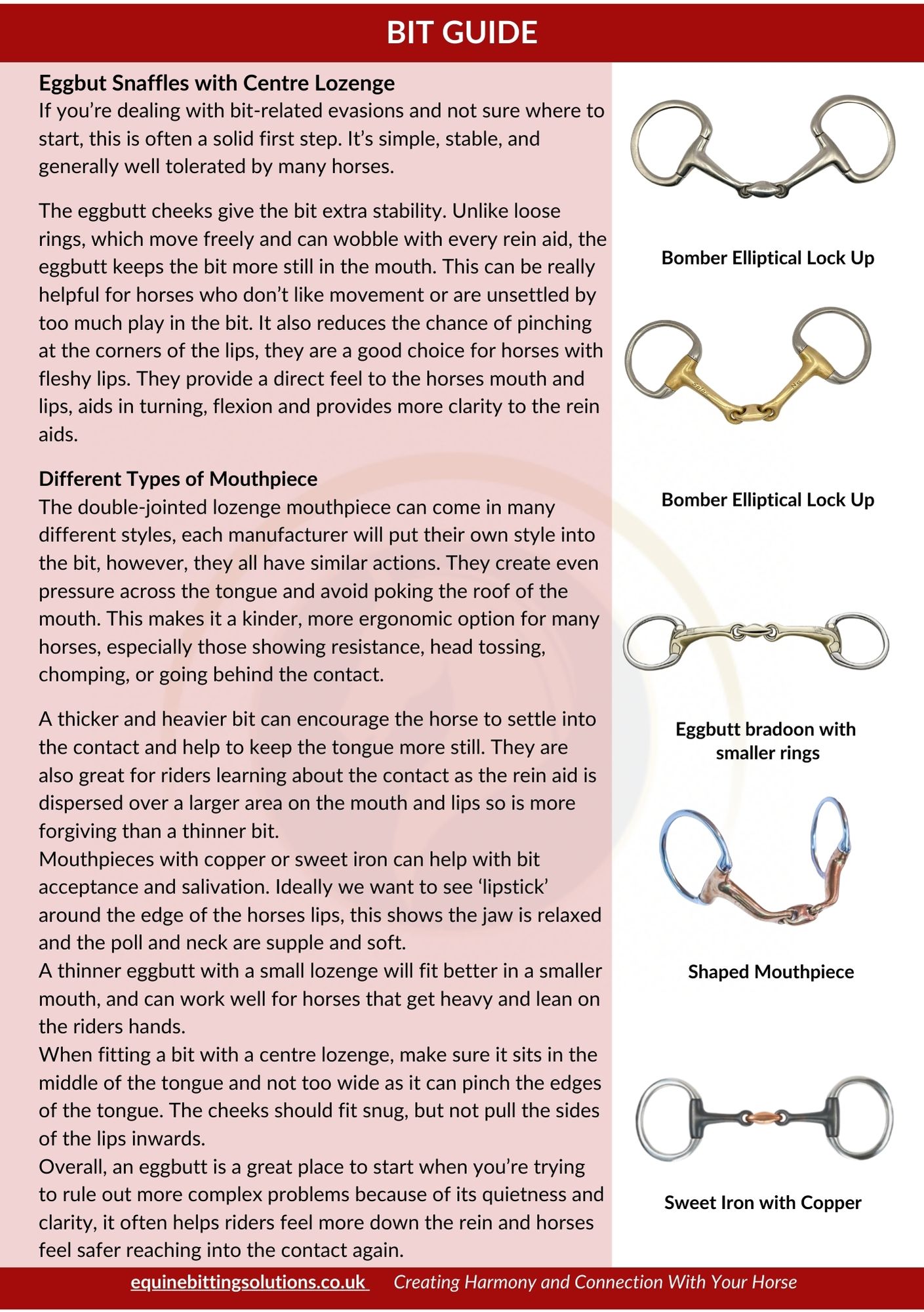
- Bit designs explained, with honest advice on what helps and what makes things worse
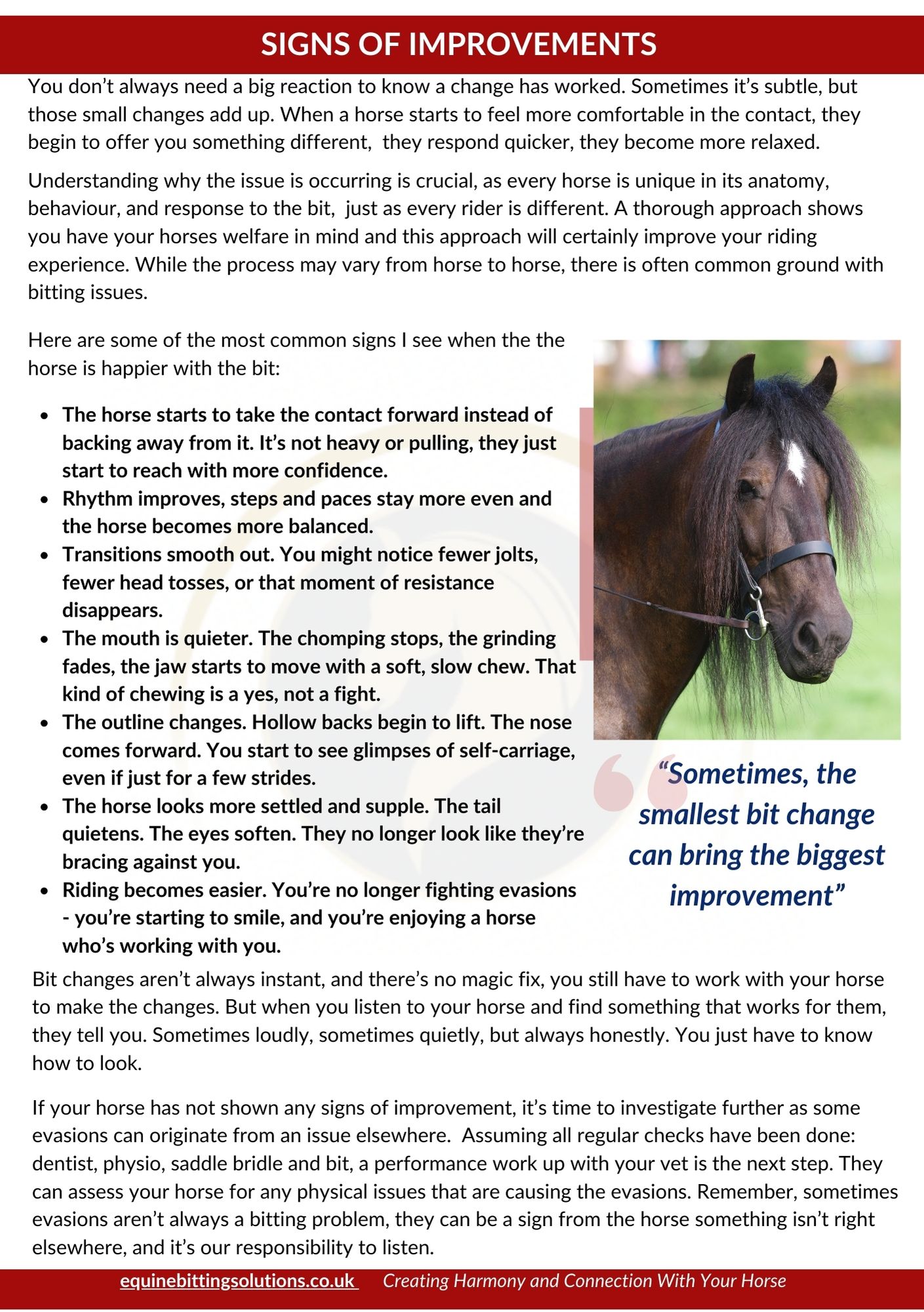
- Bridle fit, nosebands, and signs of improvement
£9.99 — Instant download
A look inside the guide – 30 pages of practical, welfare-first advice you can use straight away.
Frequently Asked Questions
Why does my horse put its tongue over the bit?
Tongue evasions are almost always a response to discomfort or a past association with an unpleasant experience. The bit may be sitting too low, may be too thin, or may be creating pressure the horse is trying to escape. Rider hands and inconsistent contact can also contribute. The horse may have been bitted poorly at the start. It may also come from weakness/lameness. This guide covers tongue evasions in detail, including which bit designs are most likely to help and which tend to make things worse.
Why does my horse open its mouth when I pick up the contact?
Mouth opening is one of the most common and most misunderstood evasions. It can be caused by bit fit, bridle fit, rider hands, or an underlying physical issue. A tight noseband that forces the mouth shut does not solve the problem, it masks it. This guide helps you work through the most likely causes before reaching for a new piece of kit.
Can lameness cause bit evasions?
Yes, and this connection is often overlooked. Horses in discomfort elsewhere in their body frequently show mouth and bridle evasions as a secondary sign. This guide includes a section on the relationship between lameness and bit evasions, and what behaviours to watch for that may indicate a vet assessment is needed before any bitting changes are made.
Why does my horse toss its head when I ride?
Head tossing is rarely about the bit alone. It can be caused by bit discomfort, bridle fit, poor saddle fit, dental issues, rider hands, physical tension, or even lameness. Before changing the bit, it is worth working through a checklist of possible causes. This guide gives you that checklist and walks you through each one systematically.
How do I know if my horse is behind the bit?
A horse that is behind the bit will feel light or empty in the contact, may curl its nose towards its chest, and often looks round or on the bit but is actually avoiding the contact altogether. It is easy to mistake for a good outline. This guide covers overbending and behind the vertical in detail, explaining why it happens and what to do about it.
Is this guide suitable for all disciplines?
Yes. While many of the examples are drawn from dressage and flatwork, the principles apply across all ridden disciplines. The assessment process and evasion types covered are relevant to any rider working with a horse that is not comfortable or consistent in the contact.
Do I need a professional bit fitter to use this guide?
No. This guide is written specifically for riders and horse owners to use themselves. It walks you through the same assessment process a professional bit fitter would use, in plain practical language. If you work through the guide and still need personalised help, Angela can visit you in person if you are based in her area, if not, she offers in-depth remote bitting consultations worldwide.
If you would like more information about bit fitting for your horse, please message us HERE – we are happy to help.


