
Starting a young horse is one of the most important things you will ever do.
Get the bitting right at this stage and you build a horse that seeks the contact willingly, trusts the rider’s hand, and has a solid foundation for everything that follows.
Get it wrong – even with good intentions – and you can create evasions, anxieties and bad habits that take years to unpick. Sometimes they never fully go away.
The problem is that advice on bitting young horses is everywhere, and a lot of it is outdated, contradictory, or based on what bits manufacturers want to sell rather than what actually works for the horse.
This guide cuts through all of that.
Written by Angela Rudrum, independent bitting consultant and advanced trainer with 35 years of experience starting young horses, it gives you the honest, welfare-first guidance that most riders never get told – until something has already gone wrong.
What makes this guide different:
Angela doesn’t just tell you which bit to buy. She walks you through the whole picture — your horse’s physical development, their temperament and fitness, your own hands and position, and why some of the most commonly used starter bits are actually the worst choice you can make for a young mouth.
Inside the guide you will find:
- A pre-bitting health checklist covering teeth, wolf teeth, tack fit and physical readiness
- How age, fitness, conformation and temperament should influence your bit choice
- Why stability matters more than anything else at this stage
- Which bit designs give young horses the best possible first experience
- Which bits to avoid completely and exactly why they cause lasting problems
- How your hands and position shape your youngster’s relationship with contact from day one
- Common problems with young horses explained clearly with practical solutions
- A full bit guide with honest explanations of how each design actually works in the mouth
£9.99 — instant download. Could save you years of problems.
Frequently Asked Questions
What is the best bit for a young horse just starting work?
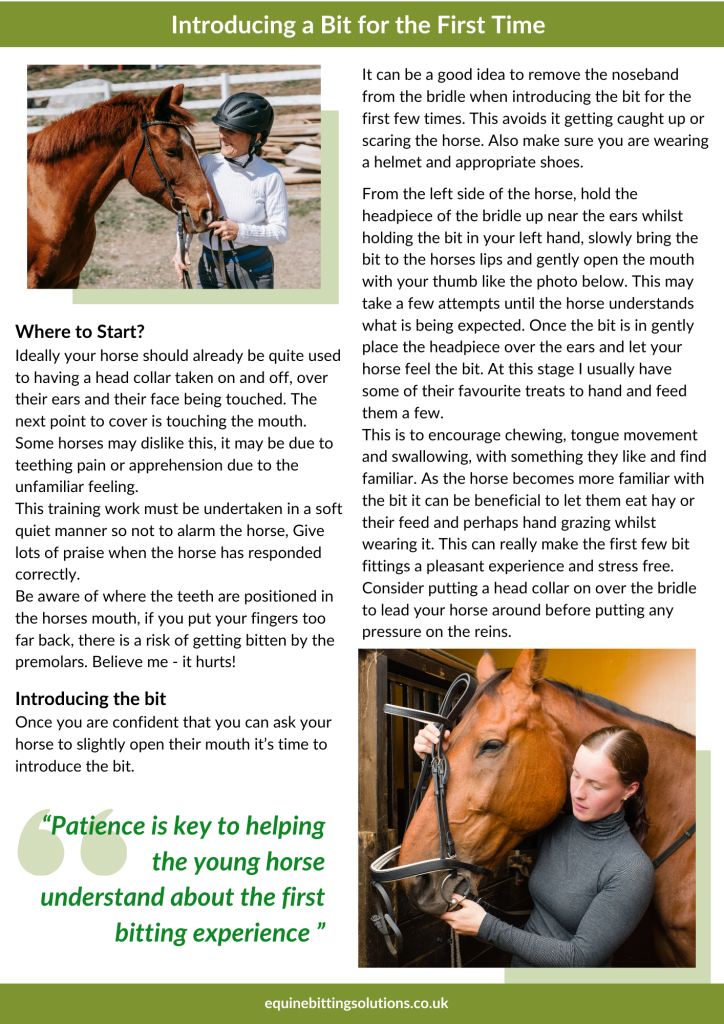
The eggbutt snaffle is widely recommended as a starting point for young horses because it provides stability in the mouth, a clear and consistent feel, and does not pinch the lips. This guide explains why bit stability matters so much at this stage and what to look for when selecting the right size and thickness for your individual horse.
When should I introduce a bit to my young horse?
There is no single right answer as every horse matures differently, both mentally and physically. Some horses are ready to begin ground work and bit introduction at three years old, others need more time. This guide covers the key signs of physical and mental readiness to look for before you start, so you can make the decision based on your horse rather than a fixed age.
Are French link bits suitable for young horses?
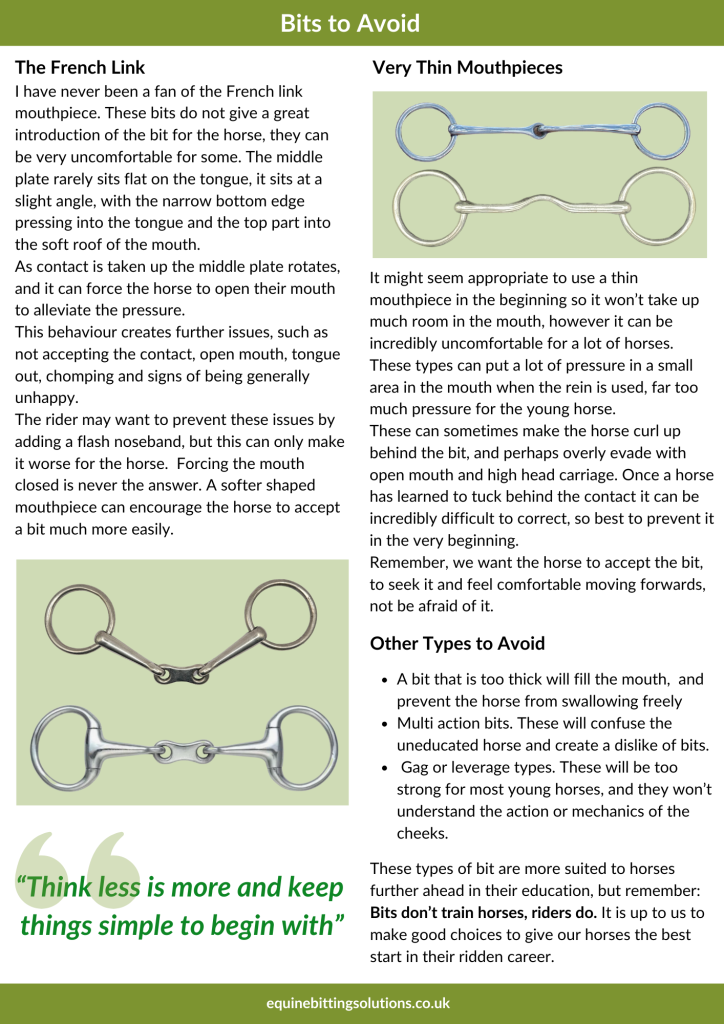
This guide advises against French link bits for young horses. The middle plate rarely sits flat on the tongue and can rotate under contact, creating an uncomfortable sensation that may cause the horse to open their mouth, come behind the contact, or develop a lasting dislike of the bit. Starting with a simpler, softer mouthpiece gives the young horse a much better first experience.
Can the wrong bit damage a young horse’s training?
Yes, and this is one of the most important points in the guide. A bad first experience with a bit can create evasions and anxieties that take a very long time to correct. Choosing a bit that is too thin, too unstable, or too severe at this stage can teach the horse to fear the contact rather than seek it. The guide explains clearly which designs create confidence and which ones risk creating lasting problems.
My young horse is chomping and chewing excessively – is this normal?
Some mouthing and exploration is normal when a horse is first introduced to a bit. However excessive chomping, particularly once work has begun, can be a sign that the bit is uncomfortable, the horse is physically tired, or the work is beyond their current fitness level. This guide covers the difference between normal mouthing and signs that something needs to be addressed.
Does rider position affect how a young horse takes to the bit?
Absolutely, and this is something many guides on young horses overlook entirely. The young horse is learning what contact means for the very first time. Inconsistent, heavy, or unsteady hands at this stage can create anxiety and evasion that has nothing to do with the bit itself. This guide includes a rider evaluation section specifically addressing this.
Want Personalised Help With Your Young Horse?
This guide gives you the knowledge to make confident, informed decisions. But if you would like expert eyes on your specific horse, Angela is available for both in-person and remote consultations.
If you are based in Kent or the South East, an in-person bit fitting appointment means Angela can assess your horse directly, watch them go, and work with you on the spot.
If you are further afield, a remote consultation gives you the same level of expertise wherever you are in the world. Simply submit photos, videos and a detailed questionnaire and receive a personalised written report within five working days.


