Bits For Young Horses
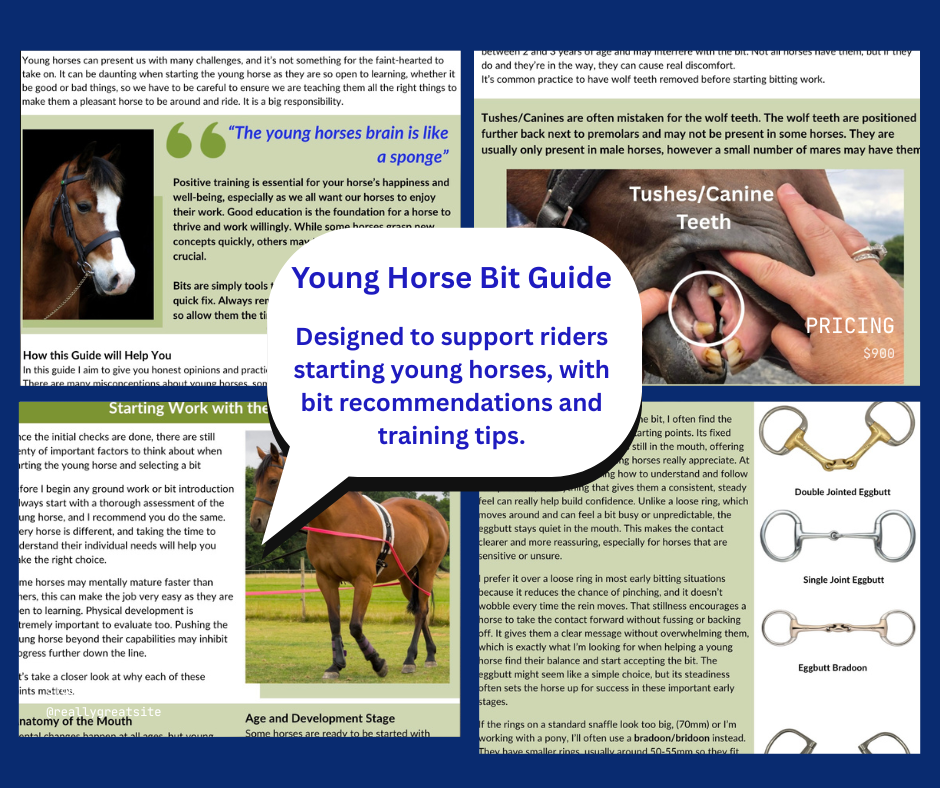
Starting young horses is something I see rushed far too often, particularly as spring arrives and people are keen to get going. Choosing the right bit for a young horse from the very beginning can have a significant impact on their understanding, confidence, and long term way of going. It can be a minefield, with so many bits available it can be difficult to know where to start. If you would like an in-depth guide about bits for young horses, you can download my guide HERE
Introducing Your Young Horse to a Bit
When a horse is first introduced to a bit, it is not just about steering or stopping. The bit plays an important role in educating the horse, helping them understand rein aids, and developing clear communication. There are still many old fashioned bits commonly used when starting young horses, but some of these can cause issues later on in training if they create confusion or discomfort.
The bit used at this early stage really matters. Young horses are still growing and learning how to respond to rein aids, how to balance themselves, and how to understand contact. This applies not only when ridden, but also when lunging and long lining. A bit that creates unnecessary movement, uneven pressure, or inconsistent signals can quickly lead to resistance and evasions that then become habits.
Clear Communication
When working with young horses, simplicity and stability are key. Clear, consistent signals allow the horse to learn without anxiety or tension. A bit that moves excessively in the mouth or applies pressure unevenly can make it much harder for a young horse to understand what is being asked of them, particularly when they are still developing strength and coordination.
Early Stages of Training and Learning
Some commonly used bits are not always the best choice for young mouths. Bits that create excess movement or inconsistent rein contact can lead to tension, avoidance, or a lack of confidence in the contact. These are all undesirable behaviours under saddle at such an early stage and can affect the horse’s way of going as their training progresses.
Getting the early training stages right makes everything that follows much easier. Having started many young horses over the years, I have seen first hand which bits tend to support clearer understanding and which ones often contribute to unnecessary problems. Using bits that encourage consistent contact and clear communication helps to prevent many common issues later on in training.
Help is at Hand
If you are unsure where to start and have received conflicting advice, booking a bit consultation with an experienced equine bit fitter can help ensure you are giving your young horse the best possible start. For riders who are outside my usual service area or who would like additional guidance, I have created a Bits for Young Horses Guide.
Download Your Young Horse Bit Guide
This guide goes into more detail about bit choice for young horses, including which bits are best avoided when starting youngsters, why they can cause problems, and what tends to work better during the early stages of training. The guide is designed to educate rather than dictate. Every horse is an individual, but having the right information early on can prevent many common issues later.
The Bits for Young Horses Guide PDF is available to download via my website, click HERE